Introduction
When I started learning digital marketing, one topic kept appearing in almost every course: SEO.
At first, I didn’t understand why it was considered so important. I thought SEO was only about ranking websites on Google.
As I continued learning, I realized that SEO is much more than rankings. It helps search engines understand a website and makes it easier for people to find useful information online.
What Is SEO?
In simple terms, Search Engine Optimization (SEO) is the process of improving a website so that search engines like Google can understand its content and show it to the right audience.
Before learning SEO, I assumed that publishing a website was enough. Later, I realized that if search engines cannot understand a page, people may never discover it.
That changed the way I looked at websites. Creating content is only one part of the process. Helping search engines understand that content is equally important.
Understanding On-Page SEO
As I explored SEO further, I learned that it has different areas, and one of the first concepts beginners usually study is On-Page SEO.
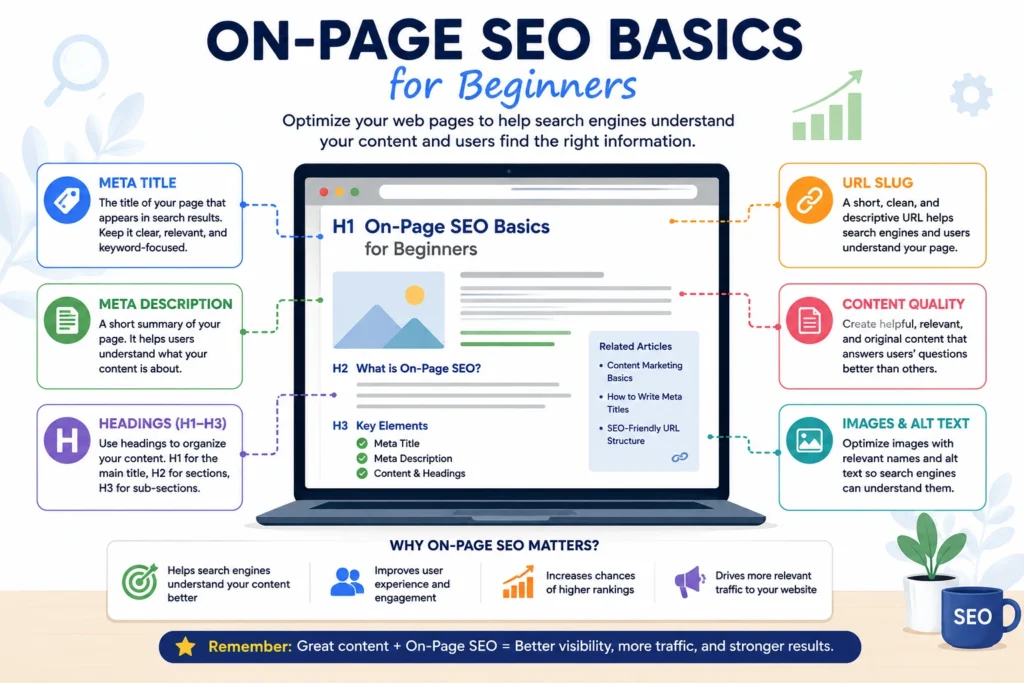
On-Page SEO focuses on everything that can be optimized inside a webpage. This includes the content, headings, page structure, titles, descriptions, and other elements that improve both user experience and search engine understanding.
For me, On-Page SEO was interesting because it combines writing, organization, and basic technical knowledge.
Why On-Page SEO Matters
One of my biggest realizations was that creating a good website is not enough if nobody can find it.
For example, when someone searches for a product or a question on Google, they usually click one of the top results because those pages appear relevant and trustworthy.
Behind those results is a combination of useful content and good SEO practices.
That helped me understand that SEO is not about tricking search engines. It is about making content easier to understand, easier to navigate, and more useful for users.
The Basic Elements of On-Page SEO
As a beginner, these were the main elements I learned about:
- Meta Title
- Meta Description
- Headings (H1–H3)
- URL Slug
- Well-structured paragraphs
- Internal linking
- Image optimization
- Clear page structure
Each of these elements helps search engines understand the page while also improving the reading experience for visitors.
Why Learning SEO Is Valuable
The more I learned, the more I realized that SEO is useful for almost everyone who works online.
Whether someone is building a business website, creating a personal portfolio, writing a blog, or managing digital content, understanding basic SEO helps improve visibility and accessibility.
For someone learning content marketing, SEO also connects naturally with content strategy because creating valuable content and helping people discover it go hand in hand.
My Biggest Learning
The biggest lesson for me was that SEO is not just a technical skill.
It is also about understanding how people search for information and how websites can provide better answers to those questions.
Instead of focusing only on rankings, I now see SEO as a way to improve the overall experience for both users and search engines.
Conclusion
Learning On-Page SEO changed how I think about websites and digital content.
It showed me that publishing content is only the beginning. Organizing that content clearly, making it easy to understand, and helping people discover it are equally important.
As I continue learning content marketing, I plan to explore topics like keyword research, technical SEO, and content optimization in future articles.
Note: This article reflects my learning as a beginner while studying SEO. My goal is to document what I learn through practical execution and improve my understanding over time.